


I. What is Smart Casual?
Smart Casual is one of the most troublesome terms on an invitation. It’s not as straightforward as “formal,” nor as carefree as “casual.” It requires finding a fine line between the two—a line drawn well is tasteful, a line drawn poorly is awkward.
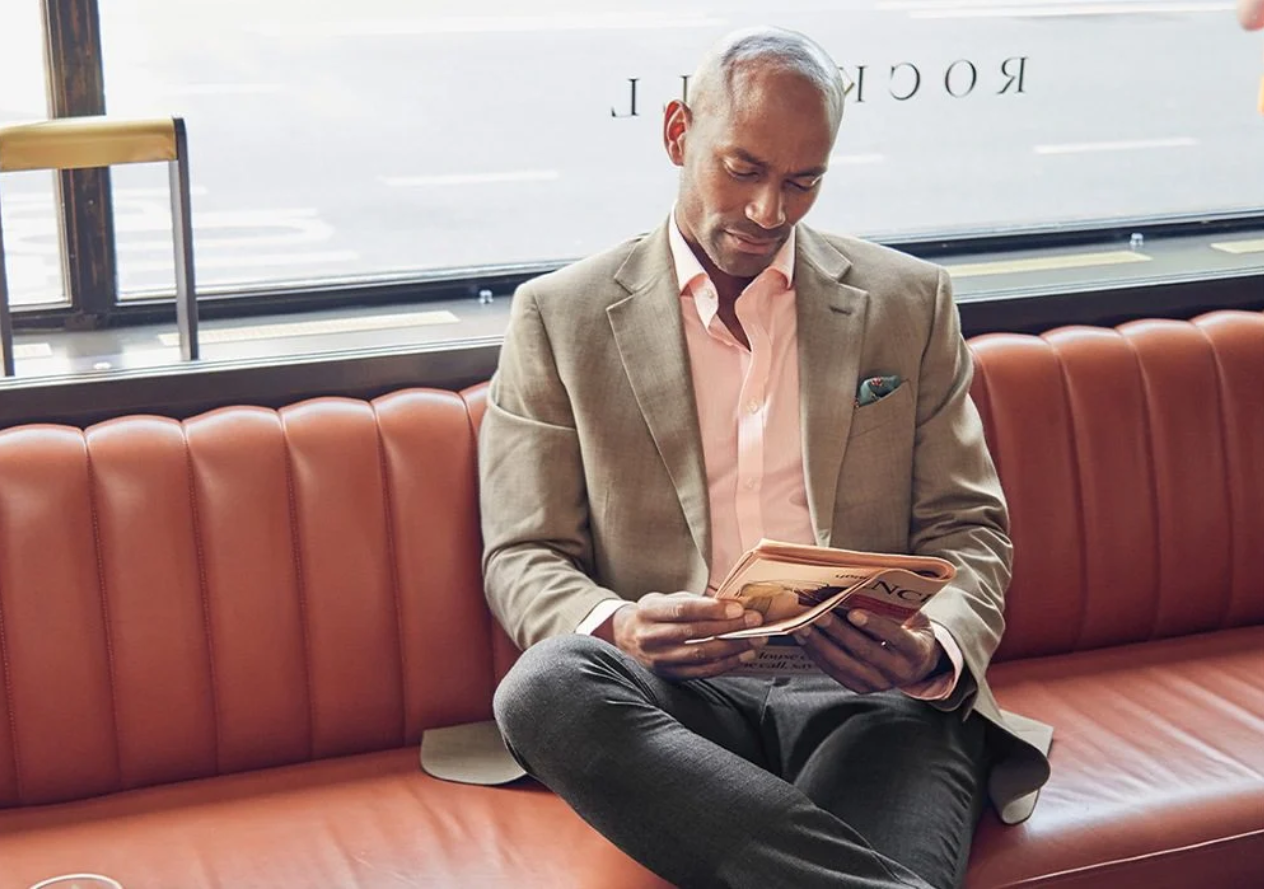
Simply put, Smart Casual is about looking “thoughtful, but not overdone.” A well-tailored blazer with dark jeans, or a crisp shirt with khaki pants. The key is: each piece must withstand close scrutiny, but the overall look shouldn’t make you look like you’re attending a board meeting.
II. Core Items: The Foundation of Your Wardrobe
1. Blazer (But not the work blazer)
Ditch that padded-shoulder, stiffly structured business blazer. Smart Casual requires an unstructured blazer—natural shoulders, no lining, worn like a sophisticated cardigan, yet still looking crisp. Navy blue, charcoal gray, or slightly textured blends are all safe choices.
Remember: this is a key piece to make you look “well-mannered,” not a “pressured” burden.
2. Shirts: Oxford Cloth is King
If you can only buy one shirt, get an Oxford Cloth Button-Up Shirt. It’s more casual than your dad’s business white shirt, yet more formal than a crew neck tee. Tuck it into your trousers with a blazer, or leave it out with dark jeans and boots. It never steals the show, but it’s always there.
A plaid shirt is also acceptable, but avoid overly large checks and overly bright colors. You don’t want the shirt to speak for you; you want it to do the talking.
3. Knit Polo: The Secret Weapon
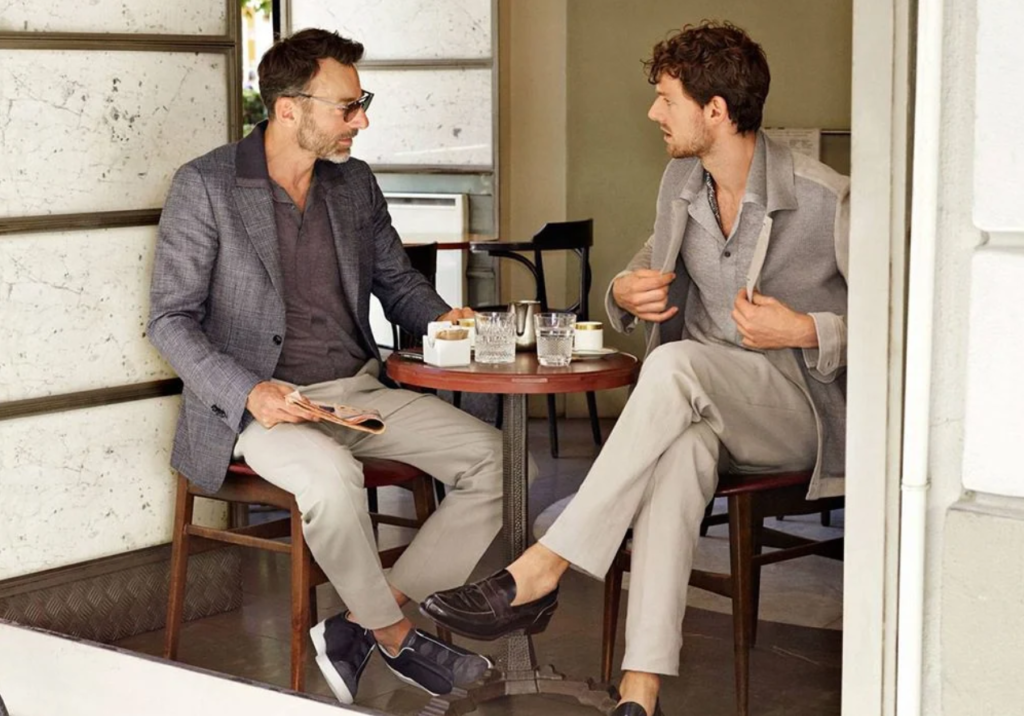
This is the most underrated item for Smart Casual. A collar more than a T-shirt, less formal than a shirt. Wool or cotton knit polo shirts in navy, olive green, and dark brown—these colors go with almost anything in your wardrobe. Pair them with dress pants for a gentlemanly look, with jeans for a sophisticated one.
4. Pants: Khaki and Dark Jeans
Khaki pants are the backbone of smart casual. Beige, navy, dark gray, stone—buy a few well-fitting pairs and rotate them. Don’t buy them too tight, and don’t buy ones where the cuffs bunch up above the shoes. Roll up the cuffs, just above the shoes, for a clean and sharp look.
Jeans are okay, but they must be dark. Black or unwashed indigo. No rips, no faded washes, no skin too tight. Straight leg or slightly tapered, rolled up at the cuffs, the length just above the shoes.
5. Shoes: The Details That Determine Success or Failure
This is where most people stumble.
Derby Shoes – Brown, with a slightly thicker rubber sole. More casual than Oxfords, more formal than sneakers. They go well with jeans and dress pants.
Loafers – Penny or fringed loafers, leather. They can be worn with boat shoes in summer, but avoid formal occasions.
Minimalist Sneakers – White leather, clean design, no ostentatious logos. Common Projects pioneered this trend, and now they’re available at various price points. Note: These are “minimalist” sneakers, not your running shoes.
Don’t wear running shoes. Don’t wear basketball shoes. Don’t wear any shoes you’ve seen at the gym.
III. Styling Rules: How to Be Effortlessly Appropriate
Rule One: Disassemble the Suit
Wear your suit in parts. A navy blue suit jacket with beige khaki trousers, or gray dress trousers with a brown sports jacket. Once the top and bottom don’t match, the whole outfit shifts from “business” to “casual.” This is the essence of Smart Casual—breaking the rules, but retaining the core.
Rule Two: Tie-less Suits
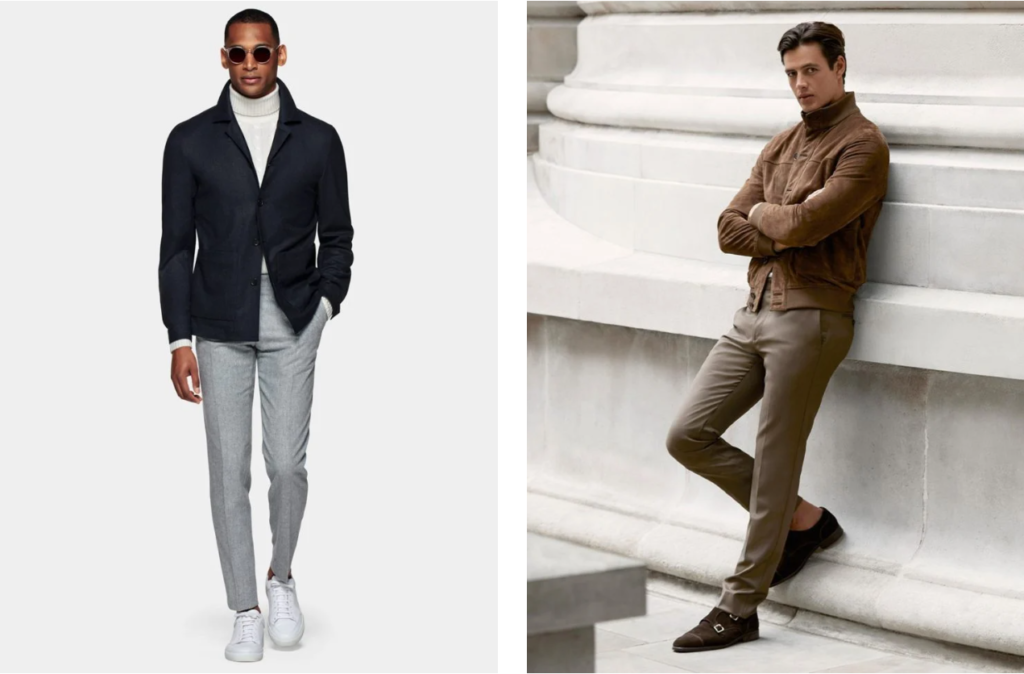
Wearing a suit without a tie is a classic Smart Casual solution. But the suit must be chosen correctly: unstructured, single-breasted, and not too business-like in color. Pair it with an Oxford shirt, denim shirt, or even a turtleneck sweater. Swap the shoes for loafers or derbies, and you instantly transform from an “office worker” to a “man with an sense of occasion.”
Rule Three: Shirts with Knitwear
Wear a crew neck sweater, V-neck sweater, or cardigan over a shirt. This is a style perfected by the British over three centuries of afternoon tea—classic, warm, and layered. Let the collar and cuffs peek out; attention to detail is key.
Rule Four: Turtleneck Sweaters Instead of Shirts
Turneck sweaters, once only worn by villains and professors, are now a favorite of Smart Casual. Black, navy, and grey—fitted but not constricting. Replace your shirt with this and pair it with a suit jacket or overcoat for an intellectual yet unapproachable look.
IV. Seasonal Responses
Spring/Summer
Linen shirts, lightweight khaki trousers, loafers or boat shoes. Brighter colors are acceptable: light blue, off-white, pale pink. But choose only one bright color; keep the rest understated.
Autumn/Winter
Wool coats, Chesterfield coats, or pea coats. Layer a sweater over a shirt, then a suit jacket. Switch to flannel or heavyweight cotton trousers. Choose a cashmere scarf; avoid overly conservative colors—dark green, burgundy, and camel are all good choices.
V. Common Mistakes
Mistake 1: Too Formal
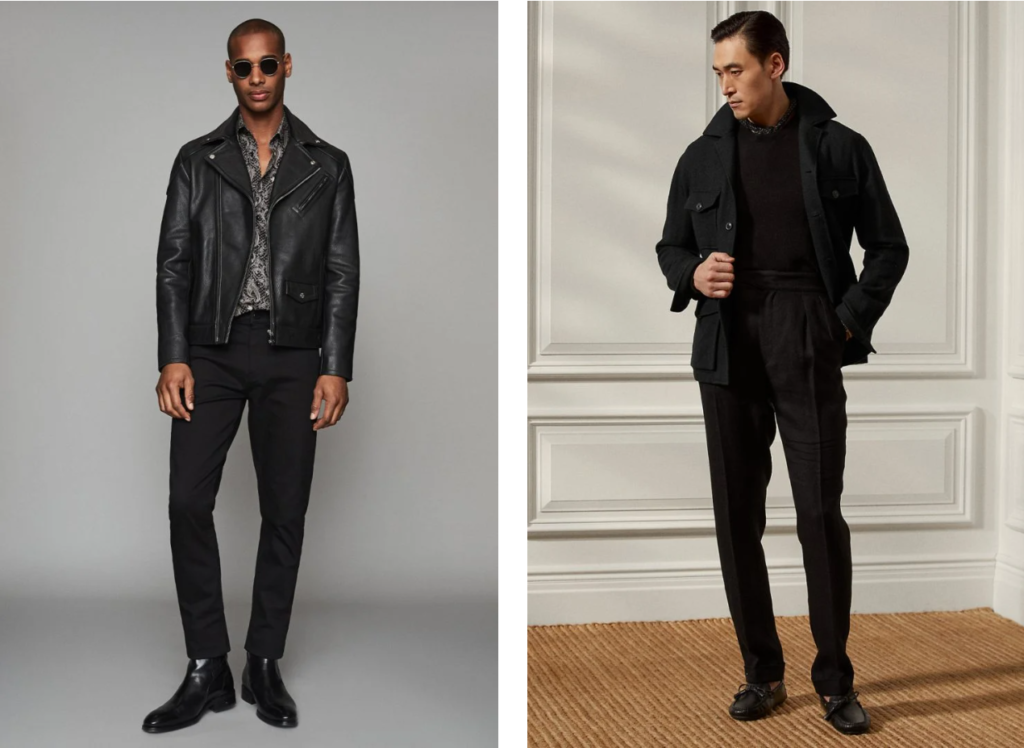
A full suit, tie, and black leather shoes—you look like you’ve wandered into the wrong room. “Smart” in Smart Casual means intelligent, not serious.
Mistake 2: Too Casual
Sweatpants, hoodies, and old sneakers—you look like you haven’t woken up yet. Smart Casual’s “Casual” means relaxed, not sloppy.
Mistake Three: Ill-fitting
Even the biggest brand is a waste if it doesn’t fit. Shoulders fit perfectly, waist slightly tapered, and trousers the right length—this is more important than any logo.
Mistake Four: Neglecting Shoes
Women look at bags, men look at shoes. A pair of dirty sneakers can ruin all your efforts. Keep it clean, keep it presentable.
VI. Three foolproof combinations
Combination 1: A safe choice
- White Oxford shirt
- Navy blue unstructured blazer
- Dark straight-leg jeans
- Brown derby shoes
Combination 2: Relaxed weekend
- Navy blue knit polo shirt
- Beige khaki trousers
- White minimalist sneakers
Combination 3: Autumn/Winter Layering
- Light blue Oxford shirt
- Grey V-neck sweater
- Dark grey flannel trousers
- Black Chelsea boots
Smart Casual isn’t a fixed formula, but an attitude: I respect the occasion, but I also respect myself. I don’t need clothes to prove myself, but I won’t allow clothes to betray me.
Ultimately, the best Smart Casual is when you forget you’re wearing it—no longer worrying about being too formal, no longer agonizing over being too casual. You are simply present, appropriate, and at ease.