



I. Why Talk About Shirts
In a man’s wardrobe, shirts speak volumes more than any other item. A good shirt ensures you look presentable in any situation, while a bad one can make even the most expensive suit look like it was bought secondhand.
The problem is, there are just too many shirts on the market. Cuban collars, Oxford cloth, flannel, linen—the names are dizzying. But the truth is, you only need eight. Not eighty, not eighteen, just eight. Choose the right eight, and you’ll be ready for all seasons and almost every social occasion.
Here’s a list of these eight shirts, and why they deserve a place in your wardrobe.
II. Eight Essential Shirts
1. Classic Oxford Shirt (OCBD)
If you could only buy one shirt, buy this one.
Originating in the United States, the Oxford shirt was initially the uniform for Ivy League students, and later became the most versatile casual shirt in the world. Its fabric is thicker than a dress shirt, with a slight texture, and the button-down collar gives it a casual yet sophisticated look.
White, light blue, and light pink—these three colors are sufficient for most situations. The cut shouldn’t be too tight or too loose. The shoulder seam should fall precisely where the shoulder and arm meet, and the hem shouldn’t bulge when tucked into trousers.
It can be paired with jeans, dress pants, tucked into a blazer, or worn alone. No other shirt can do this.
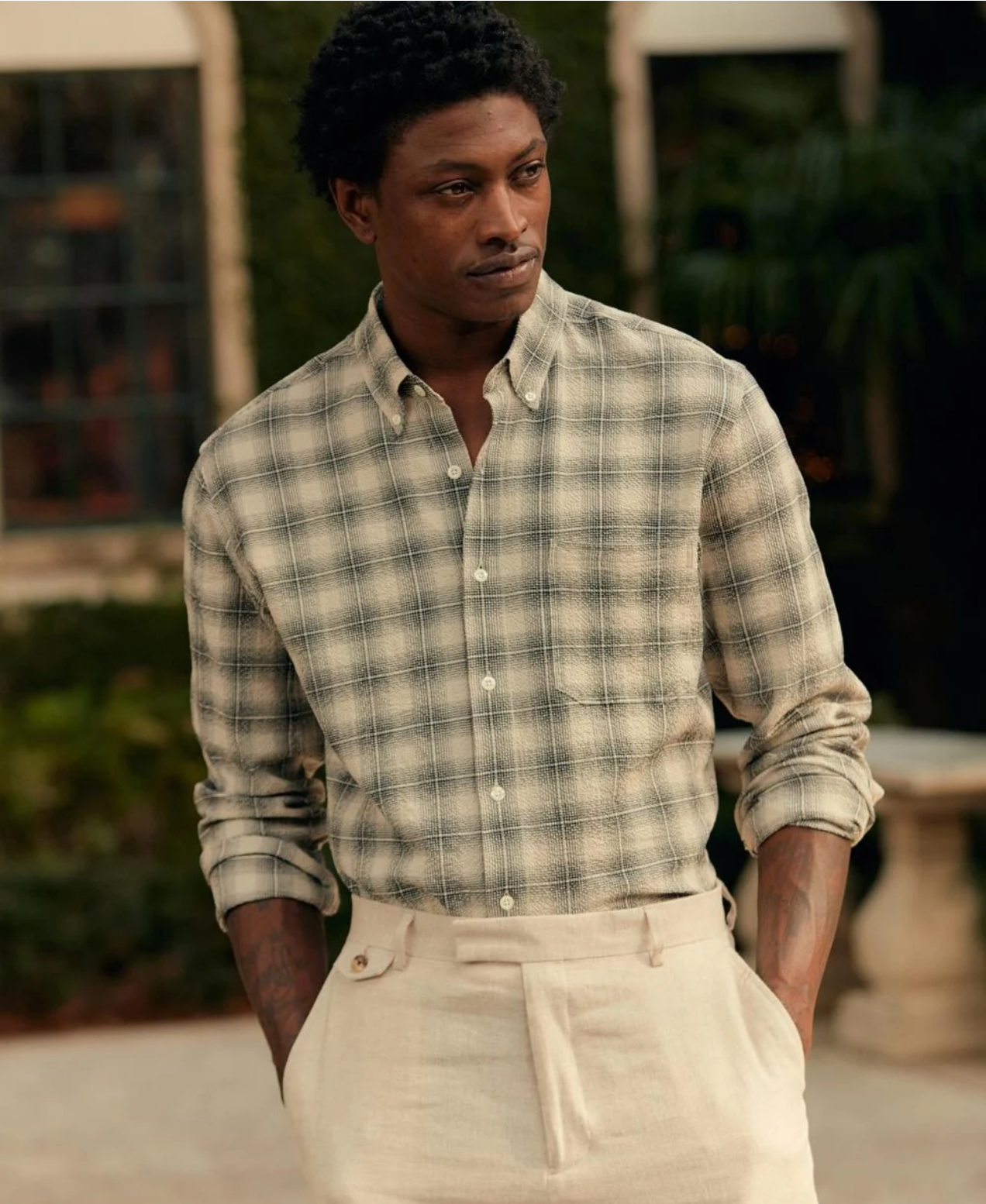
2. Heavyweight Flannel Shirt
Winter calls for a shirt that can withstand the cold. Flannel is the answer.
This brushed cotton fabric has excellent heat retention and rich color, so flannel shirts often feature plaid patterns. A good flannel shirt should be thick enough but not bulky when worn under a coat.
Buy a looser fit. You’ll wear it over a T-shirt or even a sweatshirt, with the cuffs rolled up and the hem untucked. Pair it with raw denim jeans and work boots—this is the most reliable combination for autumn and winter. Don’t buy one that’s too thin. Thin flannel will tear after a few washes and isn’t durable like tissue paper.
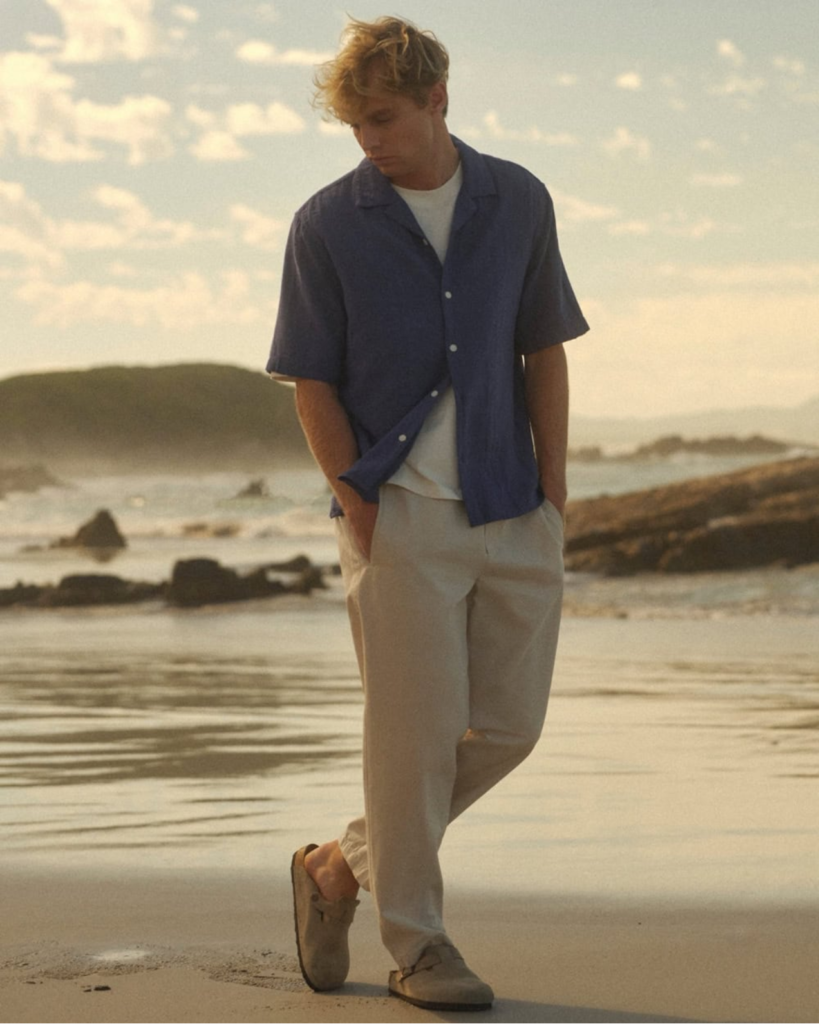
3. Cuban Collar Shirt
Summer always calls for a shirt that makes you look like you’re not at work. The Cuban collar is the answer.
Its collar flares out, revealing more of your chest, giving off a “just back from the beach” vibe. Printed versions are trendy, but solid colors are more practical—navy blue, white, and olive green—these colors will keep you cool without making you look like a tour guide on vacation.
The cut should be loose. Tight-fitting clothes are a disaster in summer; air circulation is key. Pair it with linen trousers and loafers, or even swim trunks and sandals. The bottom line for this shirt is: don’t dress too formally.
4. Linen Shirt
“Refined” and “summer” are often antonyms. Shirts look good, but they can be unbearably hot. Linen solves this dilemma.
It’s breathable, quick-drying, and wicks sweat away from your skin. The only downside is that it wrinkles easily—but wrinkles are precisely the charm of linen. A perfectly smooth, wrinkle-free linen shirt looks suspicious, like something a novice has never worn before.
Light colors are key. White, beige, light blue—these colors reflect sunlight rather than absorb it. The cut should be like an Oxford shirt: fitted but not tight. Pair it with drawstring trousers and canvas shoes for the most relaxed smart casual look for summer.
Don’t try to iron it. Accept the wrinkles, just like you accept the summer heat.
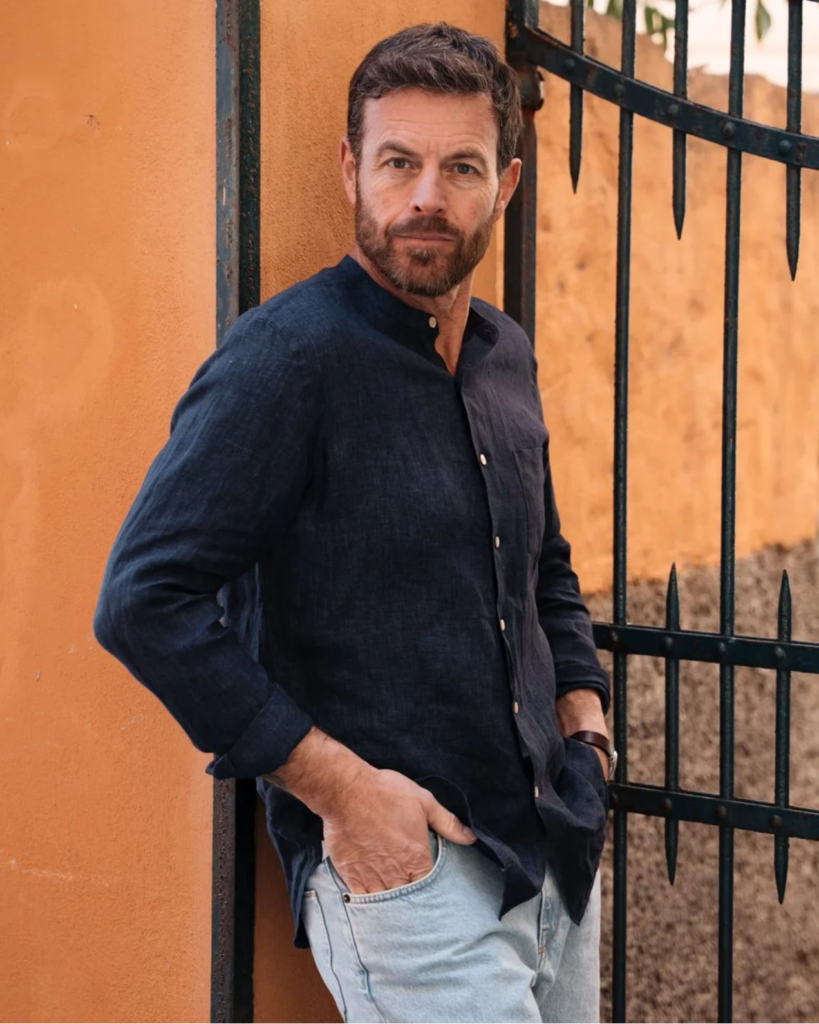
5. Stand-up Collar Shirts
Sometimes you want to wear a white shirt but don’t want to look like a bank clerk just off work. The stand-up collar shirt was created for that.
It doesn’t have the traditional shirt collar; instead, it has a narrow, upright collar. This small change elevates the entire garment from “business” to “modern.”
White is the safest choice. It gives you all the versatility of a white shirt but adds a touch of design. Keep the cut classic—not too fitted. This shirt is perfect for days when you want to look “thoughtful” but not too flashy.
6. Chambray Shirt
Denim shirts are too hot, and regular shirts are too boring. Chambray is in the middle, just right.
It’s lighter than denim, has a similar texture and American retro feel, but won’t leave you feeling hot in the summer. Indigo is a classic color, but gray and light blue are also worth considering.
It can be paired with jeans—a modern version of “denim layering,” but make sure there’s enough contrast between the two denim pieces. Light chambray with dark jeans, or vice versa. It can also be worn as an inner layer under a jacket or coat, fitting better than denim.
The beauty of this shirt is that it looks like a thoughtful choice, but it’s actually just something you grabbed from your closet.
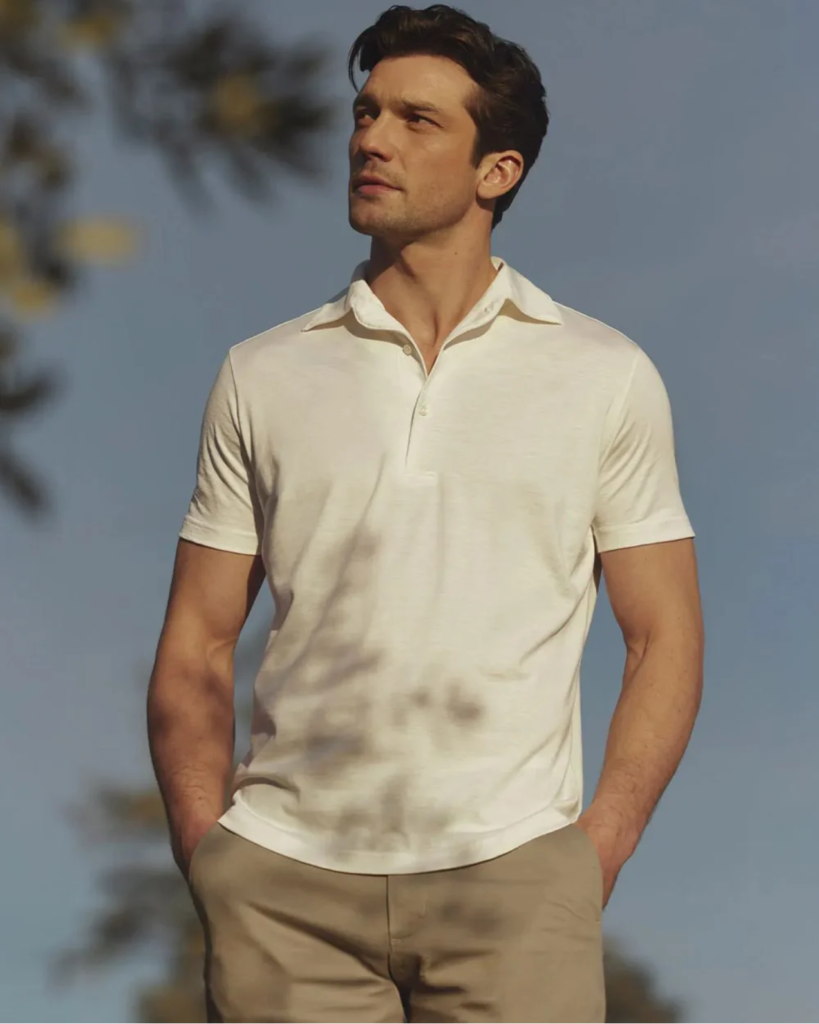
7. Classic Polo Shirt
Some days, shirts are too formal, and T-shirts are too casual. A polo shirt fills that gap.
Short-sleeve or long-sleeve, it’s all good. The fabric should be lightweight, and the collar should be able to stand up (but not actually stand up unless you’re playing tennis). The shoulder seams should align perfectly, just like a shirt. If it’s short-sleeved, the cuffs should end a few inches above the elbow.
Navy blue, white, and forest green—these colors are the most versatile. Pair them with khaki pants and loafers, or jeans and sneakers. It’s a core piece for a preppy look, but when styled correctly, it never looks out of place.
Avoid buying those with large logos. You don’t need your clothes to speak for you.
8. Knitted Polo Shirt
The last piece, and the most easily overlooked.
Wool or cotton knitted polo shirts have more texture than regular polo shirts, with a subtle grain. They’re a secret weapon for fall and winter, adding a layer of warmth to any outfit.
Burnt orange, mustard yellow, and chestnut brown—these 70s-inspired colors are particularly suitable for knitted polo shirts. It can even be paired with a suit, replacing a dress shirt and transforming the entire suit from “business” to “stylish casual.”
Or pair it with drawstring trousers and an unstructured blazer for a separates look. The colors should contrast; avoid wearing a monochromatic outfit.
III. Basic Principles of Selection
Fit is Paramount
No matter how good the fabric or how prestigious the brand, an ill-fitting shirt is a waste of money. Shoulder seams must be aligned, sleeve length should just reach below the wrist, and the hem should not bunch up when tucked into trousers.
Fewer Colors, More is More
Of eight shirts, at least five should be solid colors. One or two checks or prints are acceptable, but not too many. Solid-color shirts are canvases, allowing you to paint with your outerwear, trousers, and shoes.
Fabric Determines Lifespan
Oxford cloth, heavyweight flannel, linen, chambray—these natural fabrics become softer and more fitted with wear. Synthetic blends may be cheap, but they’ll deform, pill, and lose their shape after a few washes.
Don’t Pay for Logos
The value of a good shirt lies in its cut and fabric, not in whose logo is embroidered on the chest. Clothes without logos are more versatile and less likely to go out of style.
IV. Seasonal Distribution of Eight Shirts
Spring/Summer Mainstays: Cuban collar shirts, linen shirts, chambray shirts, classic polo shirts
Autumn/Winter Mainstays: Heavyweight flannel shirts, knitted polo shirts, Oxford shirts (as inner layers)
Year-Round Versatile: Oxford shirts, stand-up collar shirts, classic polo shirts
A man’s wardrobe doesn’t need to be complicated. Eight shirts, plus a few good pairs of trousers, a few jackets, and two or three pairs of shoes are enough for most occasions in life.
The key is: each piece must withstand close scrutiny. Not because it’s expensive, but because it fits well, the fabric is good, and the color is right. When you stand in front of your wardrobe in the morning, you can pick up any piece and know you can’t go wrong—that’s the definition of a good wardrobe. A shirt is a man’s closest armor to his body. Choose the right one, and you need no further explanation.