



I. That Unsettling Number
Last winter, I picked up a cashmere coat in a menswear store on Bond Street in London. The number on the tag made me pause—not because it exceeded my budget, but because it reminded me of a similar coat in the same store ten years ago, costing only a third of the price now.
The sales clerk approached and said, almost apologetically, “Tariffs, you know.”
Of course I knew. For the past two years, tariffs have been like an invisible thread, running through every garment hanging on the rack, from fabric sourcing to final pricing. But knowing it doesn’t change the fact that you’re facing that number; you still feel like you’re being mocked by the times.
Clothes have become more expensive. This isn’t a subjective feeling, but a fact supported by data. The question is: Why? And, in this era of soaring prices, what’s still worth spending money on?
II. Tariffs: The Invisible Hand
Let’s start with the most direct cause.
In 2025, the US imposed tariffs of up to 145% on Chinese clothing. This meant that a cotton T-shirt costing $100 would incur tariffs and taxes totaling $184 upon arrival at a US port across the Pacific—almost double the cost. This figure comes from Flexport’s tariff simulator, a tool that allows importers to calculate tariffs in real time by commodity code. Even though the Supreme Court later removed some of the “Liberation Day” reciprocal tariffs in February 2026, replacing them with a 10% surcharge, the cumulative effect had already taken hold.
More problematic is that this tariff storm wasn’t just targeting China. Vietnam, Bangladesh, and India—long-standing low-cost manufacturing hubs supporting the global fashion industry—were all affected. Nate Herman, executive vice president of the American Apparel & Footwear Association, aptly put it: “Tariffs have turned the entire global sourcing map upside down.”
For major brands, this is merely a number on their financial statements. Ralph Lauren’s supply chain spans China, India, Italy, and the United States, with no single country accounting for more than 20% of its production capacity. Their chief product officer can confidently attribute this to “a deliberately crafted diversified and flexible supply chain built over many years.”
Small brands don’t have this luxury. Andrew Chen, co-founder of the New York independent brand 3sixteen, ordered a batch of selvedge denim from the Kuroki textile mill in Okayama, Japan—the essential raw material for his brand’s core product, Made in the USA jeans—a month before the tariffs were announced. When the fabric arrived in the US across the Pacific, the cost was 24% higher than he expected. “This is a very difficult situation for a brand like ours,” he said. “There’s just too much uncertainty.”
He did the math: if fabric costs rise by 24%, the retail price of a pair of jeans priced at $250 (wholesale and retail combined) might increase by nearly $40. $40. That’s not a small amount for a pair of jeans.
Philadelphia designer Francis Young’s brand Paratodo is mostly made in the US, but he also received price increase notices from most of his fabric suppliers. “This is a disaster,” he told me in a private message. Ironically, tariffs were originally intended to encourage domestic manufacturing, but Yang believes the result may be the opposite: “Those companies supposedly incentivized to bring production back to the US are most likely to lay off workers to maintain their profit margins. You literally can’t produce everything we make here without decades of industrial development.”
Data shows that the average effective tariff rate on US apparel imports reached 35.1% in December 2025, compared to only 14.7% in January of the previous year. 71% of fashion industry executives plan to raise prices in 2026, a significant increase from 52% the previous year. Victoria’s Secret alone expects a net impact of approximately $90 million from tariffs in fiscal year 2025.
The hand of tariffs is pushing prices from the production line all the way to the cash register.
III. Inflation: The Older Hand
But tariffs are not the only reason. They are merely the most prominent reef in the wave of inflation that swept through the mid-2020s.
In March 2026, the U.S. Consumer Price Index (CPI) rose 3.3% year-over-year, the highest level since April 2024. Clothing prices rose 3% over the past year. This may not sound like much until you put it in the context of wage growth, rising rents, and soaring insurance costs.
A University of Michigan report showed that the consumer confidence index at the beginning of 2026 hit its lowest point in the report’s 74-year history. “When income determines budgets,” said Taylor Poley, an economist at the Bank of America Institute, “people ultimately make choices about spending.”
These choices are reshaping the clothing market. In March 2026, the volume of secondhand clothing transactions increased by 22% year-over-year. Both low-end discount clothing and secondhand luxury goods saw growth—the former growing by more than 4% from the fourth quarter of 2025 to the first quarter of 2026, and the latter growing fivefold during the same period. This is no coincidence. It’s a microcosm of a K-shaped economy: high-income earners splurge at stock market peaks, while low-income earners tighten their belts under inflationary pressures.
ThredUp, a secondhand clothing platform, saw its revenue surge 20% to $310 million in 2025. “Resale is no longer just growth; it’s directly grabbing market share,” the company wrote in a report.
Meanwhile, department stores are experiencing a decline. Kohl’s sales fell 4% in fiscal year 2025 and are projected to drop another 2% the following year. Dillard’s sales remained flat compared to the previous year. The middle tier is disappearing, with people either looking up for secondhand luxury goods or down for discounts and secondhand items.
Clothing is becoming more expensive, but people’s attitudes towards clothing are also changing. 68% of consumers in Europe and the US said they would not return to pre-pandemic levels of non-essential spending, even with increased income. This is not a temporary contraction, but a permanent behavioral shift.
IV. The Cost Chain: The Overlooked Details
Let’s zoom in and look at the process of creating a garment.
First, there are the raw materials. Cotton prices fluctuate globally, but in 2025, due to geopolitical tensions and rising oil prices, the import price of synthetic fiber clothing increased by 2.4%. The unit price of wool garments actually decreased by 4.2%—not because wool became cheaper, but because demand for high-priced wool weakened. Consumers voted with their feet.
Then there’s shipping. Container shipping costs continued to climb in 2026, not due to temporary disruptions during the pandemic, but because of structural changes in infrastructure and compliance frameworks. Port delays, capacity constraints, and fuel costs—all of these ultimately become part of the clothing price. Shipping costs for a shirt from Asia to Europe could account for 10% to 15% of the retail price.
Next is manufacturing. The myth of fast fashion’s low prices was built on the de minimis tax exemption policy—overseas direct shipping packages valued at less than $800 were exempt from customs duties. This policy ended in August 2025. Platforms like Shein and Temu were forced to raise prices on some items by 377% and begin shifting to a US-based warehousing model. This meant slower replenishment, longer delivery times, and higher operating costs.
Finally, there’s retail. Brands need to maintain profits under the triple pressure of tariffs, inflation, and shrinking consumer demand. 71% of executives chose to raise prices, but price increases come at a cost—inventory turnover days reached a record high in 2024, 14% higher than the pre-pandemic average. Clothes sold slower, and the costs of inventory stuck in warehouses were higher.
Prices increased at every stage, and the reasons for each stage’s price increase were different. These factors combined to create the discomfort you felt when you saw that number in the fitting room.
V. What’s Still Worth Spending Money On?
Since clothes are expensive, the question becomes: In this era, what is expensive for a reason?
The answer isn’t “buy nothing,” but “buy less, but buy better.” This isn’t an empty slogan, but a rational calculation based on the “cost per wear.”
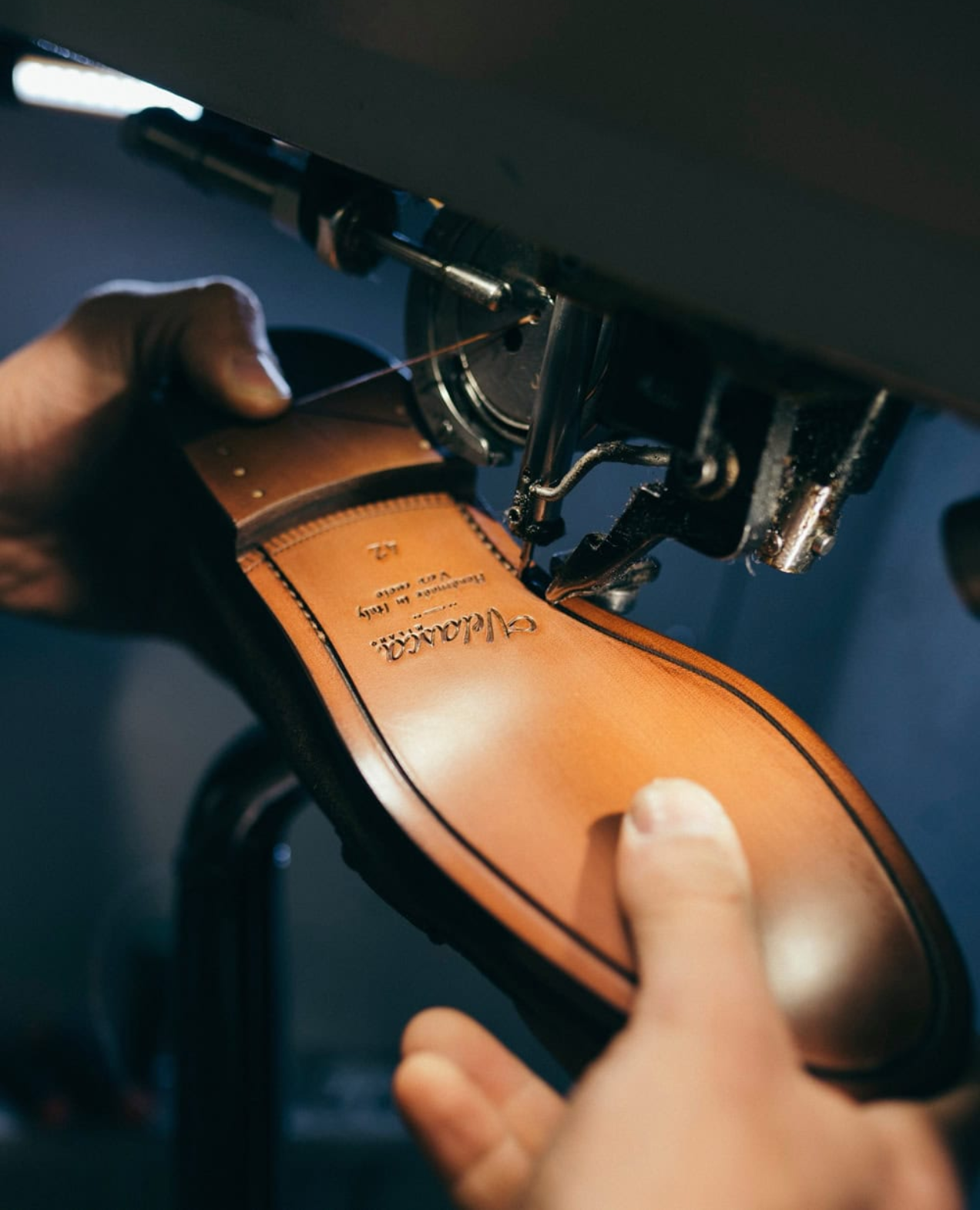
A pair of Goodyear-welted leather shoes might cost as much as £400. But with proper care, they can last ten years or even longer. Find a shoemaker who offers sole replacement services, replace the soles every few years, and these shoes can last you most of your life. £400 divided by 3,000 wears equals less than 15 pence per wear. In contrast, a pair of £100 fast-fashion leather shoes deforms and cracks after two years, making the cost per wear higher.
A navy blue wool coat has never left the fashion scene from the 18th century to the present. Buy a good one, and you can even pass it down to your son in your old age, and then to your grandson. If this isn’t a prime example of “cost per wear,” then I don’t know what is.
Raw denim jeans are another example. Those men obsessed with “raising” denim—they’ll discuss thread count, washing methods, how long to wait before the first wash, and how to achieve the perfect fading—sound a bit cultish, but once you’ve experienced a pair of heavy-duty raw denim jeans, you’ll understand the joy. Over time, the indigo dye fades in the more worn areas, creating unique whiskers and honeycomb patterns. It’s not just a pair of trousers; it’s a record of life. If the brand offers repair services, you can continue to mend and patch it, making it even more unique with age.
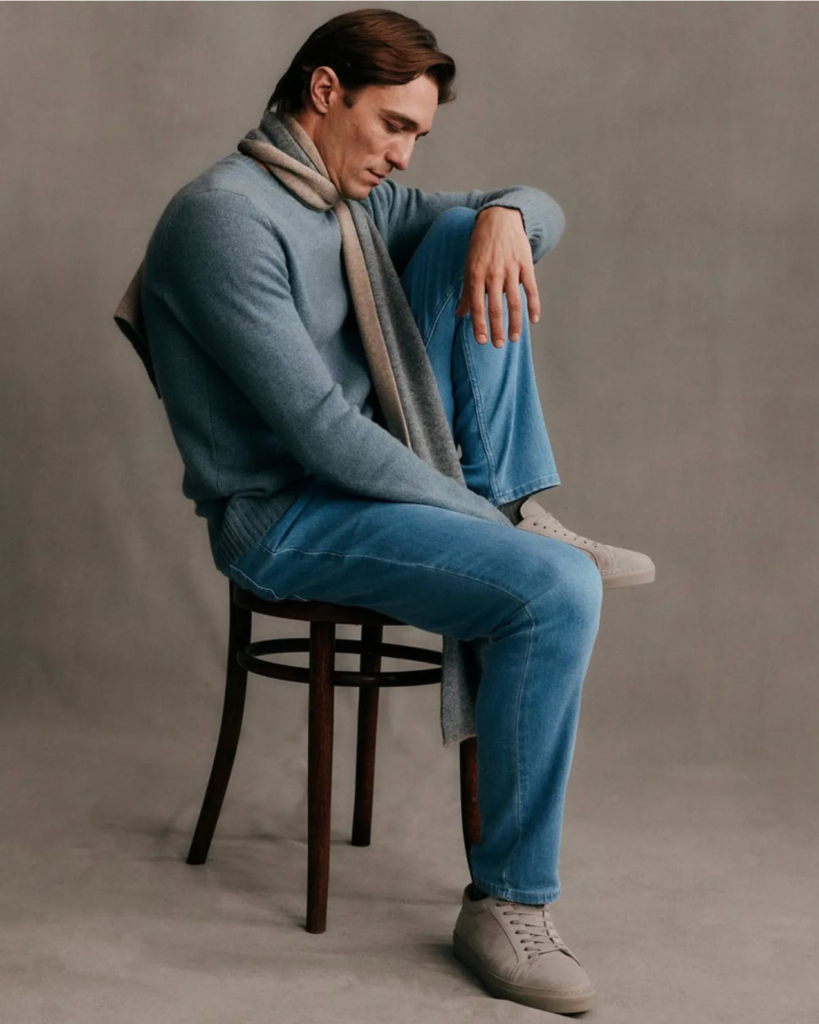
The same goes for cashmere sweaters. They’re three times softer and three times warmer than wool, and much more resistant to shrinkage and deformation. Even a single neutral cashmere sweater can add a touch of luxury to the simplest outfit and can last for years.
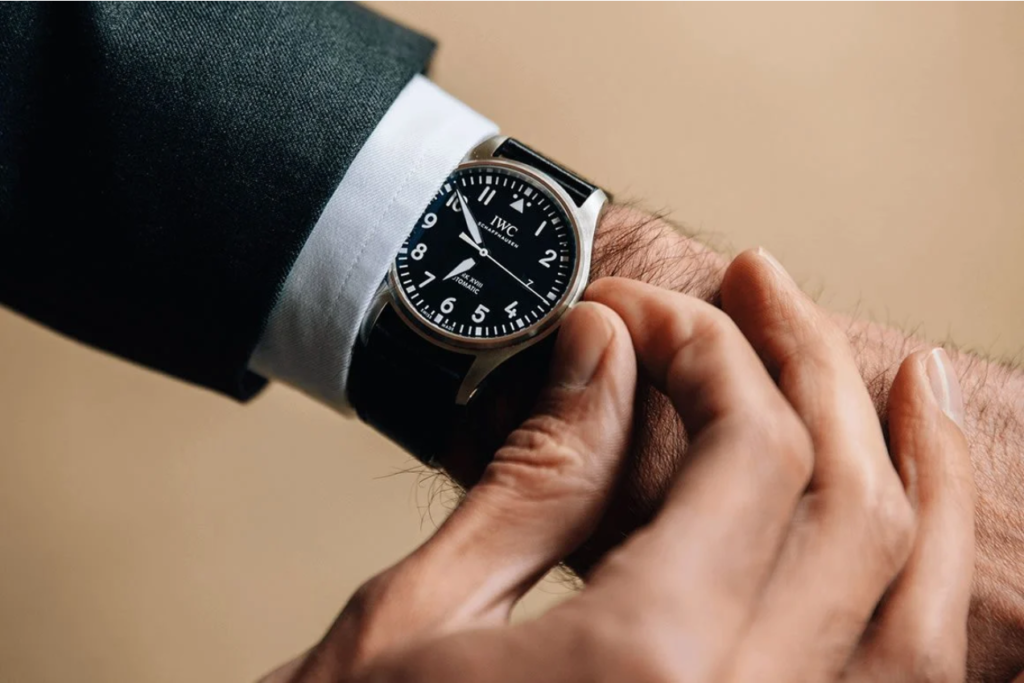
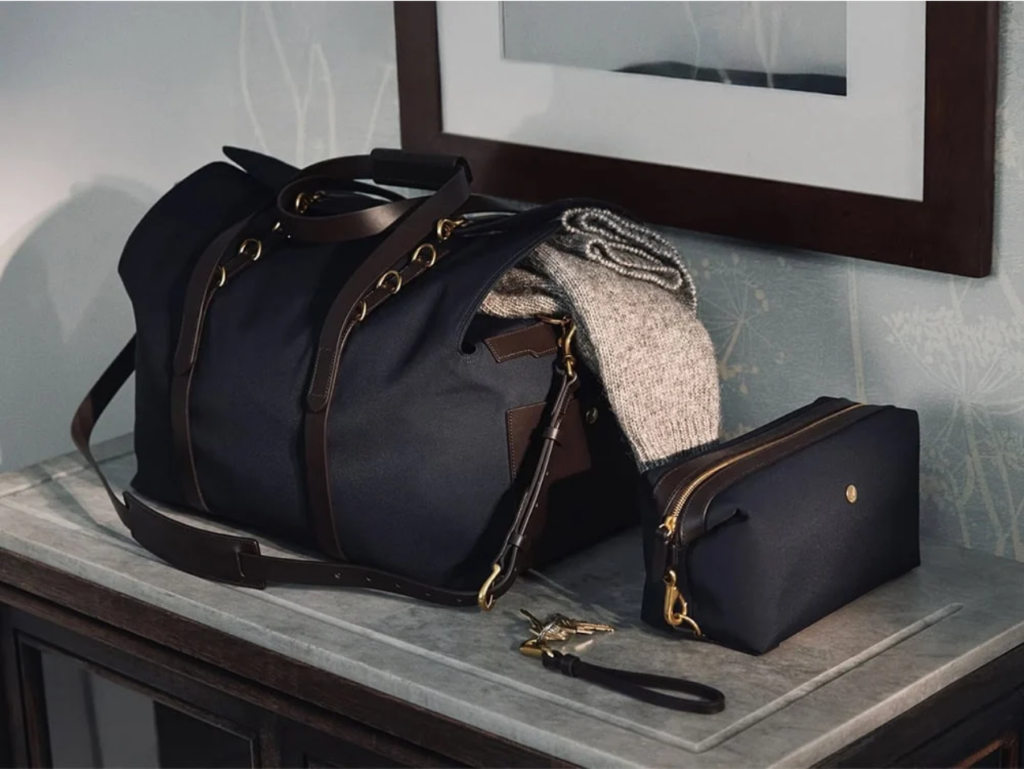
Leather jackets, minimalist leather sneakers, wool trousers, high-quality weekend travel bags—the common thread among these items isn’t their price tags, but their longevity. They won’t go out of style after one season, nor will they become unusable after a few washes. They stand the test of time, and time is the fairest judge of any consumer good.
VI. Smart Buying Strategies
In an era where clothing is increasingly expensive, how can you spend money smartly?
Buy secondhand. The secondhand market is booming and is no longer just for low-income earners. From vintage wool coats to secondhand luxury handbags, you can get the same quality for half or even a third of the original price. The key is to learn to identify quality: check the stitching, the feel of the fabric, and the wear and tear on the hardware.
Wait for end-of-season sales. Brands need to clear inventory at the end of the season, and the discounts at this time are often the most genuine. But the prerequisite is that you know what you’re waiting for—a classic piece that you’ve already tried on, know fits well, and are certain of.
Invest in core pieces. Concentrate your budget on things you’ll wear for over ten years: a good coat, a good pair of shoes, a good pair of jeans, a good cashmere sweater. Keep trendy items that you only wear for one or two seasons to a minimum.
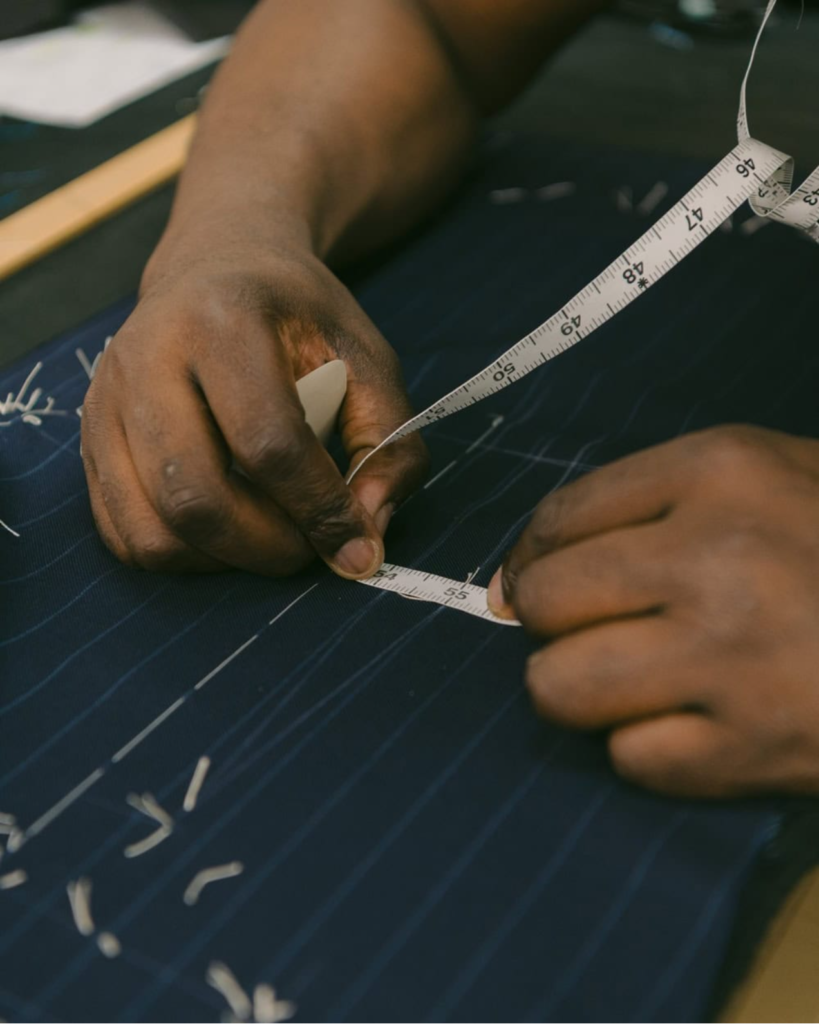
Learn to repair. Find a tailor and shoemaker in your city. A loose button, a worn-out hem, a pair of shoes that need resoling—these shouldn’t be reasons to throw them away. Repairing not only saves money but also adds a personal touch to your clothes.
Reject logos. The money you pay for brand logos doesn’t increase the actual value of your clothes. Clothes without logos are more versatile and less likely to go out of style. True luxury is when others can’t tell what brand you’re wearing, but they can tell you’re dressed well.
The increasing price of clothes is not an isolated phenomenon. It’s the result of a combination of tariffs, inflation, supply chain restructuring, and changing consumer behavior. You can’t reverse these forces, but you can adjust how you respond.
Ten years ago, we might have bought three shirts for the same amount of money. Today, we might buy one better shirt for the same amount of money and wear it for ten years. This isn’t regression, but evolution—an evolution from quantity to quality, from impulse to reason.
That number that stunned me on Bond Street in London ultimately didn’t make me buy that coat. But when I left that store, one thing was clear: the price isn’t the problem; the problem is whether it’s justified. If the answer is yes, then that number no longer makes me uneasy; instead, it becomes a promise—a promise that this coat will last me a long time, a promise that it’s worth the money.
In this era of ever-increasingly expensive clothing, the only thing we need to learn is to distinguish which prices are reasonable and which are just a bubble of the times. The former is worth investing in; the latter is worth ignoring.