



I. The Man in a Suit and Sneakers
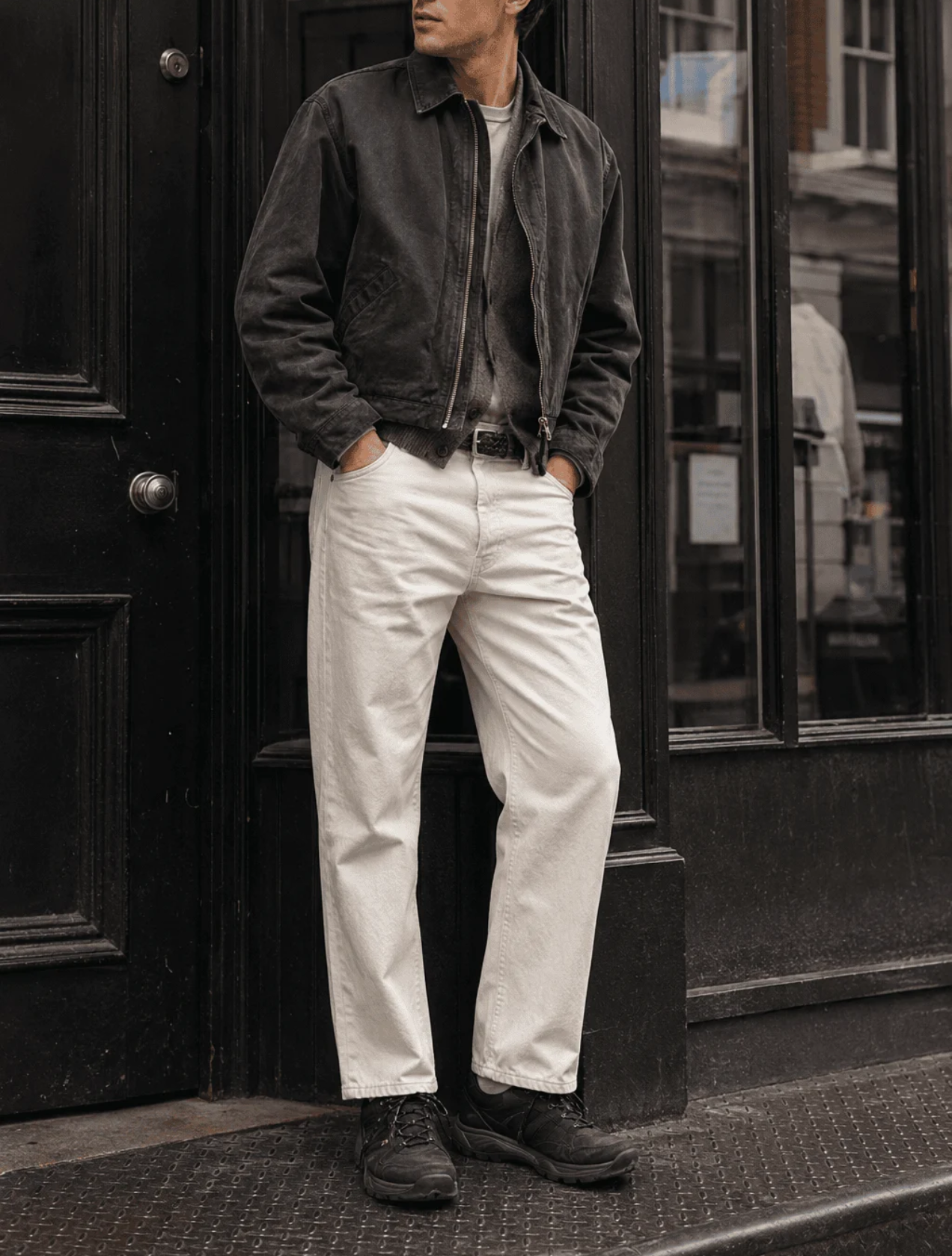
One autumn afternoon last year, I saw a man walk into a café on Fifth Avenue in New York. He wore a well-tailored dark blue suit, a white knit polo shirt underneath, and clean white leather sneakers. His demeanor was relaxed to the point of arrogance, as if he knew he was breaking the rules, and the rules themselves were making way for him.
At that moment, I suddenly realized: well-dressed men are never just about clothes. It’s a posture, an attitude towards life, a silent declaration—I respect the occasion, but I also respect myself.
This article is about well-dressed men and what they teach us.
II. Suits and Sneakers: When Tradition Meets Rebellion
Suits used to be a uniform. Bankers wore them, lawyers wore them, and people attending funerals wore them. They signified seriousness, formality, and insurmountable boundaries. But in recent years, a subtle change has occurred.
The man in the suit and sneakers wasn’t ignorant of the rules. Quite the opposite, he was so well-versed in them that he knew exactly where to break them.
A well-tailored suit—navy, charcoal, or medium gray, single-breasted, with a moderately wide lapel—remains a cornerstone of the modern man’s wardrobe. But when paired with minimalist leather sneakers, the entire outfit shifts from “business” to “tasteful casual.” This isn’t sloppiness, but a calculated sense of relaxedness.
The key lies in proportion and materials. The sneakers must be leather, with a clean design and no screaming logos. White, black, or navy are the safest choices. The suit shouldn’t be too baggy, or it’ll look like it was borrowed from his father’s closet. The trousers can be rolled up slightly, just enough to reveal the shoes, making that dividing line—where the suit trousers meet the sneakers—the visual focal point of the entire look.
A knitted polo shirt instead of a shirt, a silk pocket square adorning the chest—these are details that keep a suit “smart,” not “slouchy.” You’re not just wearing an outfit; you’re wearing an attitude: I know what I’m doing, and I do it effortlessly.
III. Summer Jackets: A Battle Between Lightness and Style
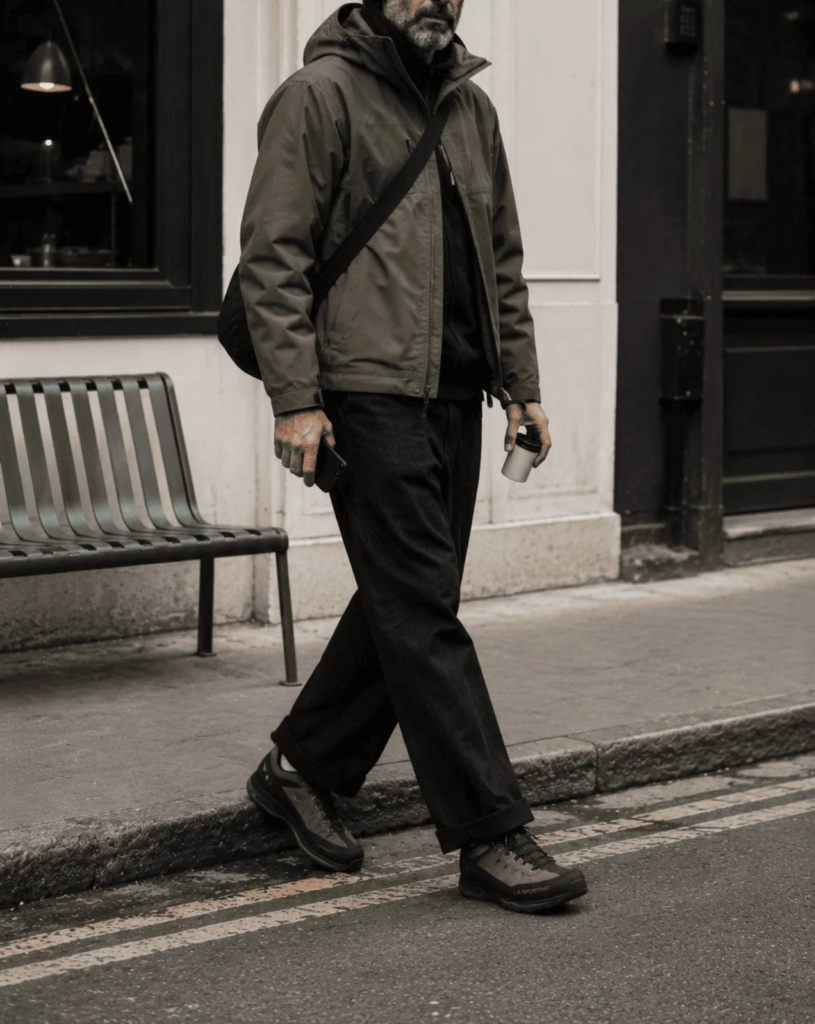
As temperatures rise, suit jackets become inappropriate, and men need another way to maintain their style. Summer jackets are the answer, and there’s more than one.
The Harrington Jacket—a British legend from the 1950s. Elvis Presley wore it, James Dean wore it, and Daniel Craig’s Bond wore it. The stand-up collar, slanted pockets, and short, clean cut—these elements ensure it remains timeless seventy years later. A beige Harrington jacket, paired with a white T-shirt tucked into slim-fit jeans and suede desert boots—this is the most classic summer combination, simple to the point of being austere, but always reliable.
Lightweight Bomber Jacket—a military legacy evolved from pilot uniforms. Traditional bomber jackets are padded to withstand the cold of high altitudes, but the summer version retains the same silhouette, just without the padding. Paired with a plain T-shirt, slim-fit jeans, and white sneakers, it’s the perfect relaxed weekend outfit. For a slightly more formal look, swap it for khaki trousers, an Oxford shirt, and suede loafers.
What these jackets have in common is history. Not the kind of history written on museum plaques, but history worn on the body. When you wear a Harrington, you’re not just wearing a garment, but the lingering charm of an era.
IV. The Faces That Know How to Dress
In this age dominated by social media, well-dressed men are no longer just on magazine covers. They’re on TikTok, on Instagram, and in the corner cafe.
Wisdom Kaye—Vogue calls him “the best-dressed man on TikTok.” His style is a blend of modern and retro, alternating between gothic black and a vibrant color palette. He never lingers in boredom. From Balmain shows to campaigns for Dior, Fendi, Ralph Lauren, and Coach, his rise demonstrates how social media has reshaped the power structure of fashion. A young man, a mobile phone, can let the world see his taste.
Leon Dame—the German boy who conquered the runway with his unique walk at Maison Margiela’s 2019 show. Wearing a faux leather jacket and knee-high boots, he was practically bare-chested, yet his presence made him unforgettable. He later walked for Givenchy and Lanvin, and closed for Louis Vuitton. His story tells us that in the sometimes overly similar world of fashion, the difference lies not in what you wear, but in how you wear it.
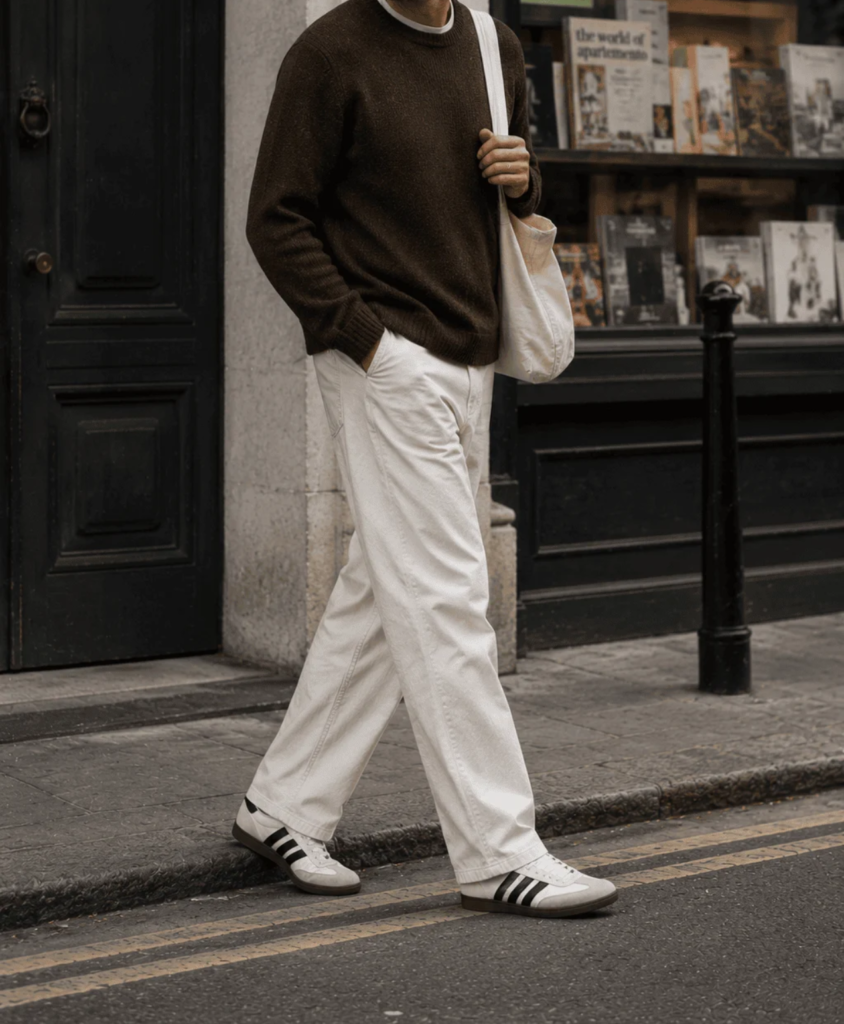
Jorge Lopez—a Chilean-born actor, musician, and dancer. He works for Loewe and Ralph Lauren, but more often appears in the front row than on the runway. High cheekbones, curly hair, and a Latin-inspired languid elegance. He’s not a model in the traditional sense, but he’s the face this era needs—versatile, undefined.
What these men have in common isn’t the price of their clothes, but the confidence they exude when they wear them. They know who they are, so they don’t need clothes to speak for them. Clothes are simply a way for them to express themselves, not their entire existence.
V. Lesser-Known Brands: Style Hidden Outside the Mainstream
Big brands have their place, but sometimes, true discovery lies in names you haven’t heard of before.
L’Estrange—a British brand founded in 2013, attempting to redefine the term “smart casual.” Their starting point was a perfect hoodie: retaining all the advantages of a traditional hoodie but infusing it with the DNA of tailoring. The result is a literal “smart/casual” hybrid. Now their product line has expanded to trousers, shirts, and T-shirts, each carrying the same philosophy—finding that fine line between casual and sophisticated.
Stiksen—a Swedish hat brand aiming to transform baseball caps from a street symbol into sophisticated pieces that can be paired with suits. They adhere to Scandinavian minimalist design, using high-end materials and rejecting heavy logos. A Stiksen hat paired with a tailored jacket is an elegant evolution of the “dad cap.”
WAHTS—an independent brand from Amsterdam, fusing luxury menswear with contemporary sportswear. Their track pants are made from 100% organic cotton, merino wool, or premium bonded fabrics, with a slim fit and tapered cuffs, suitable for both formal and casual occasions. Zippered pockets and concealed drawstring waistbands—these details demonstrate that even track pants can be made with the sophistication of a suit.
What these brands have in common is that they don’t aspire to be the next Zara or H&M. They cater to those willing to spend a little more money and effort on quality. In this era of rampant fast fashion, this positioning itself is a form of courage.
VI. Men at a Banquet: When the Occasion Requires Your Best Appearance
There are occasions where you can’t wear a suit with sneakers. There are occasions where you need to look like you’ve just stepped out of a classic movie.
A banquet is one of those occasions.
A well-tailored suit in black, navy, or charcoal gray is the safest choice. If you want a touch of personality, gray or dark gray are also good options. But avoid overly flashy colors—the last thing needed at a banquet is someone trying to steal the spotlight with their clothes.
A tie is the finishing touch. Choose a color that contrasts with your suit; stripes or classic patterns are fine, but don’t let it clash with the suit. A black belt and black dress shoes are the safest combination; make sure the shoes are polished. If you don’t like black, brown leather is a second-best option. But never wear sneakers—it’s one of the few occasions where sneakers are truly inappropriate.
Remember: At a banquet, you’re not there to showcase your fashion adventure. You’re there to demonstrate respect for the host, an understanding of the occasion, and control over your image. The best attire is the kind that, in retrospect, people will say, “He looked good,” not “He dressed strangely.”
VII. The Essence of Dressing Well: A Narrative of Self
Ultimately, the difference between well-dressed and poorly-dressed men isn’t the size of their wardrobes, or even how much money they spend.
The difference lies in this: the former treats clothing as a language, while the latter treats it as a cover.
A good outfit—whether it’s a suit, jacket, shirt, or shoes—should make you feel more like yourself, not more like someone else. It should give you the confidence, when you look in the mirror, that “this is how I want to look today.” It shouldn’t be a disguise, but an amplification.
In this era of increasingly expensive clothing, this attitude becomes even more crucial. You can no longer buy three shirts for the same amount of money, as you did ten years ago. You must choose: buy a better one, wear it longer, and make it part of your story.
The man in the New York café, wearing a suit and sneakers, may have spent three months’ salary on the suit and two weeks finding the perfect pair of sneakers. But when he walks in, he knows every penny was well spent. Not because others will notice, but because as he sits there, sipping his coffee and watching the flow of people outside, he feels an indescribable ease.
That’s the ultimate definition of dressing well: not about the clothes, but about the state of being while wearing them. A balance that’s neither arrogant nor self-deprecating, a wisdom that respects the rules while maintaining individuality, an art that makes the investment of time in yourself visible.